
Spotify

Apple Podcasts

Amazon Music
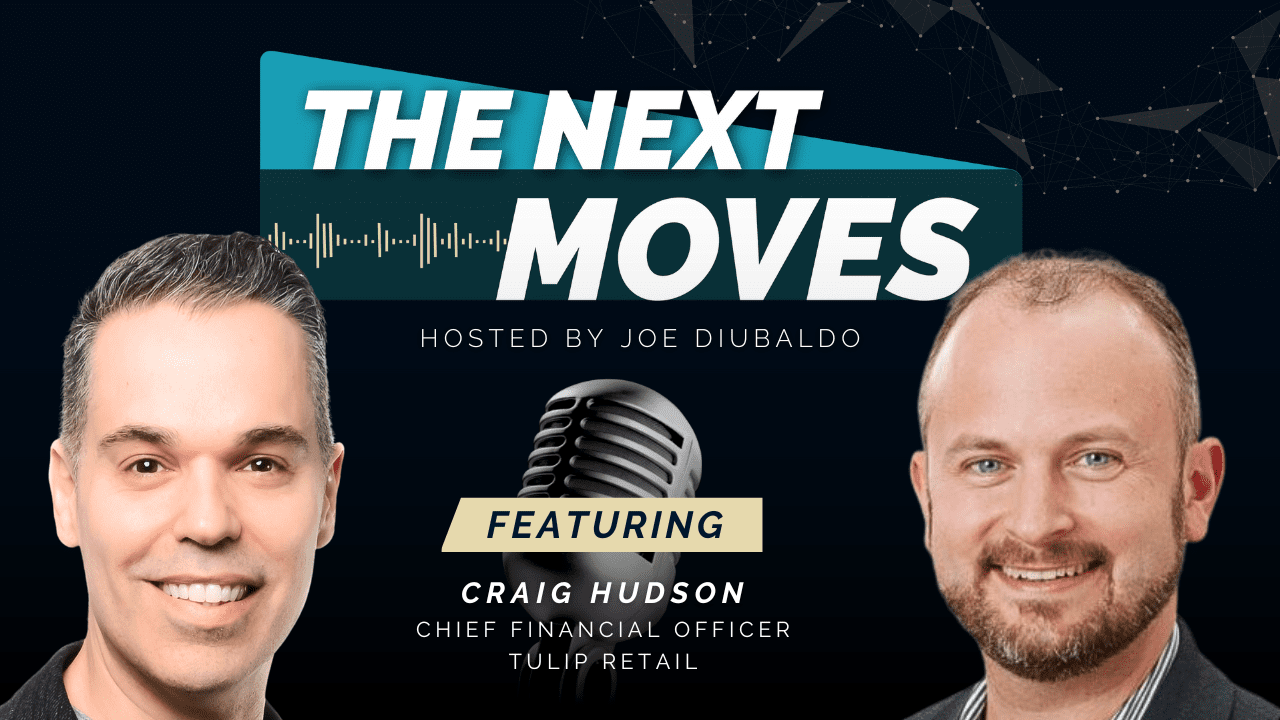
In a recent conversation with Craig Hudson, CPA, CA, CFA, a seasoned CFO with experience in various sized organizations across various types of industries, we delved into the intricacies of his career and the lessons he’s learned along the way. As a recruitment firm specializing in finance and accounting placements, we know that Craig’s journey offers valuable insights for C-level executives aiming to grow their businesses and for anyone who is looking to make the right next move in their career.
Craig’s career trajectory highlights the importance of bridging gaps and continuously building skills. His transition from KPMG, where he moved from audit to advisory, set the stage for his later roles. At Indigo, he started as the Manager of Pricing and Optimization for the digital team, despite not fully understanding the role initially. This move was driven by his strong analytical skills honed during his time in M&A, where he mastered not only running analyses but also storytelling—a crucial skill in finance.
At Indigo, Craig’s role evolved significantly. As the Director of FP&A, he focused on deep analyses that went beyond basic variance reporting, developing strategies that directly impacted the company’s performance. Craig’s responsibilities expanded to include operations, covering everything from customer service to supply chain management. This broad mandate taught him valuable lessons in leadership. He realized that effective leadership isn’t about having detailed knowledge of every role but about understanding performance, removing barriers, and aligning team efforts with the company’s goals.
Craig’s move to Knix in early 2020 coincided with the onset of the global pandemic. Despite initial sales drops, the company experienced unprecedented growth due to increased customer acquisition and retention. Craig’s ability to quickly adapt and build scenario models was crucial during this period. His proactive approach to managing the financial aspects of the crisis, combined with transparent communication from the CEO, helped stabilize the company which was acquired shortly thereafter by international health and hygiene brand Essity.
Following the $320M USD acquisition of Knixwear, Craig became the Chief Financial Officer of LumiQ, an education platform that helps CPAs with verifiable professional education through entertaining podcasts. He helped scale up the company by establishing an annual strategy, collaborative budgeting, weekly KPI reporting, enhanced Board and investor reporting, and automating processes. Now, Craig is taking on interim and fractional opportunities and as the CFO at Tulip, an omnichannel retail solutions company, he has ambitious plans to help the company reach new heights.
Listen to the full interview to hear more about Craig Hudson’s incredible career journey and what he’s learned along the way, like the importance of aligning with the CEO’s vision while also defining the CFO’s role. He also underscored the significance of a strong recruitment relationship, recounting a scenario at Knix where Clarity stepped in to help find a rare “left-handed unicorn” candidate to fill a critical role. He also delves into the importance of planning for people within organizations and how, oftentimes, people managers are brought in too late in the game.
Craig Hudson’s journey offers a blueprint for aspiring CFOs and other C-level executives. By bridging gaps, building skills, and fostering strong networks, leaders can navigate their careers successfully and drive their organizations forward.
Clarity has worked with Craig Hudson and numerous C-level executives throughout their hiring and career journeys. If you’re trying to find the high-performing talent you need to build your finance, accounting and data analytics teams, we’re ready to help!

00:07 Joe: Hello everyone, my name is Joe Diubaldo and welcome to the show. For close to 25 years I’ve been a recruiter, I’ve been an entrepreneur, and I’ve been someone who’s made it his life to help people build better careers and better companies. I love this job. This job is addictive and it’s addictive for the simple reason there’s so much learning — I get a chance to learn from people who invite me into their lives and into their companies during times of massive transformation. Along the way there’s one key lesson that always stands out — we all get stuck. We get stuck as we think about what to do next. And I think that’s where I might be able to help you get unstuck, to help you plan the next move and then the move after that. And for that reason I’m inviting people in to speak about the big moves, the decisions, the changes, and the setbacks. And we can listen to them and see what we can learn. The person I’m talking with today is Craig Hudson. Craig is a CFO who I’ve had the pleasure of working with both as a candidate and as a client for well over five years. I’ve watched his career evolve — he’s been wildly successful and I think there are some real nuggets we’re going to get from Craig today, both on what it’s like to be in these different organizations, what it feels like to build a career, but also the other parts that people don’t think about — the relationships that are built along the way. So Craig, welcome.
01:29 Craig: Thank you. Pleasure to be here Joe.
01:35 Joe: I always like to start for the audience so people can actually understand how your career evolved. I know this is something that people say “give me the origin story, give me the career path” — but I think it’s important because you’ve been in some really interesting organizations. You can start even from the KPMG days if you want to.
01:53 Craig: Yeah, okay. I mean, sort of the elevator pitch. I started out at KPMG — even before that, quite frankly, I had it in my mind — I don’t know why I’m starting with this story but it just kind of occurred to me — I loved marketing in school. I was going to go into marketing, loved loved loved it. I applied as a summer job to I think it was Procter & Gamble and the first gate was just the personality test. I did that, never heard back from them — so as far as I’m concerned I failed the personality test. But I got some offers from the accounting firms.
02:38 Joe: I don’t know what that says about me but don’t read into it.
02:38 Craig: No, no. Anyway, spent the first 10 years of my career with KPMG — initially in Vancouver, over to the UK. So about seven years in audit and then moved into an M&A transaction advisory where I was doing financial due diligence for M&A transactions of varying sizes and scopes and everything. From there decided I wanted to try and run away a bit from accounting — so the move into M&A was kind of an attempt to run away from the audit accounting. And then moved into more of an FP&A role with Indigo, initially on their online team, doing stuff that I quite frankly had no business doing but learned along the way. Built up a good little track record there, ultimately took over operations for the digital team — so this kind of completed my run away from accounting. Then after about five years in that as VP of Digital Operations at Indigo, overseeing a whole slew of things which we might touch on because it influences a lot of how I approach things now as a CFO. Moved out of there, moved into a startup company called Lift & Co — this was a technology company in the cannabis space, at that point still recreationally not quite legal yet. True startup — I was employee number 15 going in there, the first person with any kind of accounting knowledge. And then ultimately became CFO — got brought in a COO but then ultimately split the role, just as we decided what needed to happen — became CFO. Took the company public on the Toronto Venture Exchange, raised a bunch of money along the way, also learned what it truly means to raise money and all the stuff that they teach you in school. From there went on to Knix — an auspicious start because as I started the whole world shut down with the pandemic. That was kind of an odd start to a new role, just trying to figure out the sky is falling but how permanent is this and all of that good stuff. But along the way did a Series B and then ultimately sold the company in a strategic sale — which is one of the larger exits in Canada. It was a very successful and global female-friendly exit. And then moved on to another SaaS company called LumiQ, helping them to scale up operations there. And then here I am now in front of you doing more fractional CFO type work and doing what I quite enjoy doing, which is just helping companies navigate through the different growth stages.
05:46 Joe: It’s interesting as I look at your path — I often think that the job you’re doing is closing gaps that prepares you for the next job, and you don’t actually often know what gaps you’re closing. Your time at KPMG — you didn’t just stay in the audit and assurance side, you moved over into the advisory side.
06:01 Craig: Oh I did, yeah yeah. You got it.
06:09 Joe: So I think everyone would agree that looking at your move into Indigo and the kind of work that you were doing initially — can you frame that for us on how it started at Indigo and what it evolved into, and then the connection between your previous job and this job? Because I think there is one.
06:26 Craig: There totally is. And this is one of those where as you look back there is a very definite narrative, but as you’re looking forward you can’t see the story at all. So as I moved into Indigo — and again I rarely share this story — but I moved in as the Manager of Pricing and Optimization for the digital team. I had no clue what that meant, honestly. But I still moved in.
07:01 Joe: Hold on — can I just ask how do you sell yourself into the role? That’s fascinating — you’re saying this was a role that a lot of people are interested in. So how did you position yourself for that?
07:18 Craig: I think it was really just — I was strong in analytics, which came from my three years in M&A. Because in those three years I learned not just the ability to run the different analyses but more specifically the whys and the so-whats. And then how to storytell — that’s something I’ve come to understand later in my career is not always a skill set that’s well known. So there’s one part to actually run the numbers but the other part to actually be able to tell the story to different stakeholders that have different points of view and different ways of understanding what you’re about to walk them through. So the pitch was really just around my ability to run the numbers, to learn, and to be able to tell the story to whoever needs to learn that.
There are two parts to Indigo for me and both are just super critical to where I am. The first was that Director of FP&A role where I’m doing all these different analyses and really understanding what matters to the company, what’s actually going to drive results versus your standard variance analysis of “our revenues went up by 5%, there you go, put it on a PowerPoint, you’re done” — like that’s not going to do anything for anyone. But to really dive in and understand the performance of a marketing campaign so that you can learn from it, you can repeat it. At the end of my tenure as the Director of FP&A on the digital team I had a playbook of “we want to juice our sales by X%” — well, we should be running this promotion because we know that this particular promotion is going to juice our sales by about 18% incremental sales with a positive ROI. You kind of build that out and that’s super strong to have, but it wasn’t there when I got there — we had to build that out and learn it.
The other half of the role — which is on the operations side — I think is quite influential in how I approach the role today. I was responsible really for the operations of the digital company and it’s a pretty wide and vague mandate that I had. But it really ultimately became that I was owning or influencing everything from customer service, supply chain, product — anything that’s going to ultimately affect the customer experience kind of behind the scenes. One of the first big learnings I had there is I had customer service reporting into me. We brought on this great new Director of Customer Service. And as an accountant, your leadership model is “I’ve done your role before, I’m your accountant, so I can help you and lead you because I can tell you exactly what you need to do — I’ve done your job before.” When I have a Director of Customer Support reporting in, I don’t know the first thing about their role, I can’t tell them how to do their job. So at the onset that is a very challenging position to be in — until you start to learn that actually leadership isn’t the ability to tell someone exactly step one, step two, step three how to do their job, but it’s actually being there to understand how they’re performing, making sure that they understand the different challenges they’re facing, being there to remove the barriers they have, to link their role back to what the company’s doing, the mandate, etc., to raise their profile if it needs raising — to do all of that kind of stuff which you don’t need to know the individual steps for. And then along the way you learn about their role, what they’re doing. You also start to learn that you have a good business sense about it even though you don’t have 10-20 years of experience in that area. As they start to suggest something you’re like “well, that doesn’t really fit because of this business reason.” So that has helped me from an operations perspective — I started to then be able to learn the different areas around the company, not worried that I didn’t have 10-20 years of experience in supply chain or customer service or whatever it is, but just being able to go in, ask stupid questions — I’m now really good at that. Because you learn. And quite frankly as you ask some of these stupid questions, sometimes you find these little nuggets of “oh, that’s funny that that’s like that — we hadn’t really thought of it that way.” And that ties into the forward-looking piece around the relationships. Because the relationships across the executive table are stronger if you kind of understand the drivers and challenges and different elements of the person’s role and what they’re facing at a more granular and deeper level than just “marketing is there to drive revenues and that’s really all I need to know.” Because then you become more of a partner in those relationships and you can bring your financial and analytic acumen to bear on their problems.
13:05 Joe: I want to drill into two things that you talked about. The first one is the creation of playbooks in domains that you don’t have and that you’re building from scratch. And then the second thing is speaking about leadership around functions and teams that — once you hire an expert you’re like “what exactly is my role here?” So let’s start with the playbook — this is interesting because you were talking about the ability to affect revenue based on the creation of these. I think for people that are growing companies they often look at “can I just get something and apply it here?” It sounds like for you what I’m curious about is — was it creation of this through pure experimentation on your own, or was there a set of inputs and frameworks that you’d bring together and use?
13:54 Craig: So two answers. This was my learning on my own, my experimenting, and ultimately just sort of built it up as I struggled through the different pieces and taught myself. The second answer though — although that is how I did it — I would not recommend that path. What I tell most executives and CFOs now — one of the biggest things you want to do is make sure that you surround yourself with a group of peers, other CFOs you can call on and ask “I’m encountering this that or the other, have you seen this?” So you can leverage their experience. And quite frankly I’ve also got, just in general, a network of peers across the executive table. So as we’re even encountering people issues or marketing issues I can also ask someone else “have you seen this before?” So I built it up on my own — in hindsight if I had to do it all over again I would have seen if there’s someone else that has kind of done this before, because what I did at the end of the day had been done several times before by other people in different organizations. This wasn’t brand new — I just had to learn it myself.
15:09 Joe: In some ways you’re lucky you’re given that luxury, that experimentation time.
15:16 Craig: Yeah, 100%, I was.
15:16 Joe: So your view on leadership then — when you’re talking about leading outside of or even within your team, there are some lines which is “we hire experts and then we tell them what to do and then we’re upset with the results they get” — which is actually our own fault. You have a different lens on this. As you were building these teams out — and it may be the CFO lens — which is allow people to execute but always ask the question, how do you lead these other teams well?
15:46 Craig: I think that’s it. There are a few things. One is the importance of one-on-ones — which feels like just a business 101, but quite frankly you look at your calendar, it’s a busy calendar, it’s kind of the easiest one to drop but one of the worst ones to drop. So to have that regular communication — it is kind of a two-way dialogue. Setting expectations as to what you want to see in those meetings and how you want those to go. Asking lots of questions so you get into what’s going on — it’s not just a superficial update from them to you where you’re kind of half listening. You’re really getting in. Because as you understand more then you can start to add more value and they’re going to feel heard as well, which is very human and incredibly important. And then yeah, as you said — my approach is you let them do their job but you make sure that you’re understanding exactly what’s going on, what challenges they’re having, what success they’re having, so that you can respond accordingly and help out accordingly. It is not helpful for you to do their job. It is helpful for you to make sure that they have everything that they need to do their job.
17:17 Joe: So as I look at this move from a large well-known organization into Lift & Co — structure, process, control, all gone. So what was that? How’d you select for that? Why did you select it? And then what happened when you were there — what did it feel like, what did it look like compared to the old place?
17:44 Craig: The why — again there’s a nice backwards-looking narrative in my career, but when I look at some of the decision points they’re comical at times. I’d heard so many wonderful things — there’s a great mystique around the startup life and how cool is that. But the reality is it’s bloody hard work and it is often unrewarding and unfulfilling just as it can be completely fulfilling and rewarding — both at the same time. So anyway, I went into this role because I thought it’d be a great opportunity for myself and I kind of fancied myself in the startup world. I ended up being actually quite wired for that startup life — so that was a nice pleasant surprise. But I certainly didn’t appreciate what startup life meant at the time. You’re right — I came in as employee number 15 and one of the big reasons I got brought in is to really try to help mature and scale up the company and build in these different processes to help support the company reach the grand heights it wanted to get to. What I didn’t appreciate is — as much as I had built up this great experience set at Indigo — a lot of that was not as helpful at a startup company because you are starting from scratch. You can’t layer on these very detailed processes and structures and different approval layers because it just becomes too bureaucratic. You lose the magic of the startup, which is the ability to pivot and react and be incredibly agile. So there becomes a bit of an art of what to layer on to help it scale up, but what not to layer on to make sure that you’re not inhibiting the growth by adding unnecessary layers of bureaucracy.
19:44 Joe: That sounds like the art of compromise. So I guess what I really want to understand is the chaos. You join — what’s the unexpected in that? You show up day one and you’re like “here’s what happens” — some of the stuff will seem familiar to people but I’m curious. What was unexpected?
20:07 Craig: The first realization I had about what startup life is — this was my first C-suite title and I’d like to say it didn’t go to my head, but it kind of did. You know, it’s like “look at me, here I am, the CFO.”
20:24 Joe: Did you have big rings on your finger and a —
20:24 Craig: Oh my God, big necklace, you got it — all the, well they were cheap because —
20:33 Joe: All the, yeah, for a bargain.
20:33 Craig: Yeah yeah. But I came in and you know I’m doing all the big strategy work and “look at me, how impressive am I?” And then I still remember someone reached out to me — again this is a team of 15, the entire company — and said “the internet is down.” Like, okay, don’t know why you’re telling me. They’re like “well, you need to phone up Rogers and fix it.” I’m like — oh, that’s what it means to be part of a startup. Okay, like we don’t have a team of people, we don’t have the guy who’s going to be calling Rogers — that’s just, I’ll just do that then. So yeah, you’re doing a bit of everything. You don’t have the processes in place. We had bookkeepers that were making sure that everything was being recorded, but I still remember we didn’t have large dollars necessarily and we had about a quarter million in a suspense account. It just kept growing because the bookkeepers didn’t know where to put it, we had no one internally that had any clue about accounting — so it just kind of was parked there and kept on building up. So then as we decided we want to go take the company public we had to go through our first ever audit, which means we had to clean all that stuff up. And man, that was a challenge.
And even down to — I remember sitting with, as we built out our sales function, we had to change and build out our commission structure. Well that seems easy enough right — you just say it’s X% of sales and off you go. But then as you start getting into it you realize there are these different motivation factors you need to take into account. And if you’ve never done this before it is a challenge. You can go through and make just this crazy complex thing that quite frankly is not going to motivate anyone and it’s going to confuse everyone. You can go super high level and make something that’s again not going to motivate anyone, maybe it costs you too much — you have to figure it out. And again this is also where I suggest that you have people that you can reach out to and say “I don’t even know where to start on this.”
23:05 Joe: And I’ve always found it with sales teams and revenue teams — it’s dangerous to play in any form with their compensation. And it’s almost as though what’s rolled out is such a hard sell at the beginning. And if you realize you’ve made a mistake and try to iterate on that — it’s again met with massive amounts of suspicion. “Why are you doing this, what are you changing on me?” And it doesn’t matter, many times even if it’s going to benefit the majority of individuals. Because you find something like “hey, we want to reward this behavior” — it’s almost as though more is okay as long as it’s more, but changing is not. Was that your experience with this?
23:38 Craig: Absolutely, 100%. And I’ve seen that in subsequent roles as well, which also talks to the larger CFO role. The old school “just try and grind that commission percentage down as low as possible because we don’t want to spend a whole lot of money” — well, you’re dealing with people here and ultimately people need to be motivated. That motivation is going to help them drive sales. And then you’ve got the change management which now has feelings and emotions and the fear and all of that kind of built in. When you do your CPA exam, no one — that’s not a module that you’re looking through.
24:20 Joe: No. It’s interesting — it’s such a big part of the job but it’s not identified and developed at an early stage. At least when I went through. But okay — so you take the company public, it’s a big journey. This company is small and you leave to do what?
24:34 Craig: So I left and my next step was to move over to Knix. There was some time off in between, but ultimately found a great opportunity at Knix. What I didn’t appreciate — obviously — as I was coming in, this was end of February 2020 that I joined. And then mid-March 2020 the entire world turned upside down with this global pandemic.
25:10 Joe: So you joined end of February 2020 — so I had all of what, two weeks?
25:18 Craig: I think it’s two and a half weeks in the office before we shut things down. I distinctly remember we shut things down because someone’s sister’s workout partner contracted COVID and we just — we don’t know how this is going to all pan out. So out of an abundance of caution we closed the office. We brought in some deep cleaners because we don’t know how this is going to work. Candidly — I thought to myself “this seems like a bit of an overkill reaction and we’ll be back up on Monday.” And we never opened up again — at least that office. Knix is back in their office now, but they followed the same path as everyone else — it took them a couple years before they re-entered the office.
I had no appreciation for what this was going to look like from a sales perspective. Our sales tanked in the first couple of weeks — the first week they were kind of cut in half. The second week we did the old retail thing — you throw a promotion at it and try to juice a bit of sales. That helped the sales a bit but obviously cost us on the discount line, so not sustainable at all. And then I still remember April 1st — as if by clockwork, as if the entire world was just following the calendar — our sales just took off again. And basically what was happening behind the scenes, which we again didn’t appreciate at the time, is no one was buying anything. Everyone was glued to their TV watching CNN going “what is going on?” And then almost collectively as the calendar changed over, I guess a bunch of people said “well, I guess this is life now, so let’s carry on.”
27:04 Joe: So how do people — that’s that idea of such an uncertain environment. And I would assume that people are looking to you for assurance — what is that role that you play in that moment? How’s it different? Because probably part of it is “we’re looking at everything, we’re going to be okay.” So what is your role at that moment in time?
27:28 Craig: I mean, this was both as the adviser but also as a human. A few different pieces. One is — I built out, again not really understanding how big this could be — I built out a bunch of different scenario models. And again I’m three weeks into the company at this point, so these models are challenging because typically you want to have that deep understanding of what’s going on with the company and how to build a model. And so I’m building a model from scratch for a company that I’ve been at for three weeks. Which is challenging. But also building out these scenarios of “what if our sales fell by X? What if Knix — a company that sold in both Canada and the US — what if all of a sudden the border shut down entirely and we just got rid of all our US sales? What does that look like?” So you build out these different scenarios to understand how it’s going to play out. Our CEO Joanna — her big driver was to make sure that we are not affecting our people and that we’re reassuring our people. But she also of course wanted to make sure that that was the financially prudent thing to do. So we’d run through these different scenarios and on her side she was being as transparent as she could be with everyone, just saying “we don’t know what’s going on right now, we’re doing everything to protect your jobs, but we need to see how this is playing out.” She said it a lot more eloquently than I am. But as a human — you also understand that you’re building out these different scenarios not just to make sure that you’re protecting the business, but everyone is terrified of what’s going to go on.
29:05 Joe: So at least if you have these different scenarios played out — are you hiding at that point and running all of this, or are you front and center talking with people? Because I’m curious — we’re all at a distance from one another at that time. So are you present or is it really Joanna that’s leading the charge and you’re just an entity in the background?
29:29 Craig: At Knix I’m absolutely there, but it is Joanna that is leading this. The reason I say “at Knix” is it really depends on who your CEO is and whether the CFO would take that lead. This was Joanna’s company. Joanna’s also just incredibly adept at delivering these messages in a very transparent and authentic way. So it always should have been her doing that. But in terms of the executive team — I am front and center saying “this is exactly what we’re seeing.” The other benefit is I was able to cut and defer costs at the company. I say I led the project to make sure we’re doing it, but this was typically an incredibly challenging exercise to do at a company — everyone’s trying to hold on to their costs. I had full participation around the company because everyone understood “I can hold on to this consulting cost or I could potentially lose a staff member or two, and I don’t want to lose people. So yeah, have this consulting cost — let’s see if we can defer this or that.” So that was also rather unique. The other part — God forbid that anything like the pandemic should ever happen again, but it was a very unique event. Talking with other CFOs to understand what they’re doing, what they’re looking at, getting ideas. And at the time you’ve got the government rolling out different programs that we’re trying to figure out what they all mean. So you again talk to different advisers and your peer group to understand what’s going on. I’m not doing this in isolation because I’ve made sure at this point in my career to surround myself with other people that I can lean on and say “what are you doing, where are you finding some savings?”
31:37 Joe: So coming out of that the business is flying — it just kicks up in April. I’m curious — that path from “I’m in for two weeks and this is great” and “oh my goodness, now there’s a pandemic and we don’t know what’s going to happen” to everything taking off from that point forward. Is there a plan that had been pre-built that you’re executing or is it more like let’s build it as we’re running it?
31:59 Craig: More of the latter. In the sense that April was a strong month for us — May I think, April in fact ended up being our best ever month as a company at the time. May was even better than April. June was even better than May. So this was growth that we couldn’t have foreseen. And our challenge all of a sudden became — how do we keep everything in stock? How do we keep enough inventory to sell? We’re selling out of stuff. And then if you can remember back, that’s when a bunch of the supply chain issues started to also rear their head and it became very expensive to ship things. Fortunately for us, underwear is a lot cheaper to ship across the ocean than, you know, a refrigerator. So it definitely impacted us but not as much as other companies. But we were still trying to figure out over the first few months — how much of this is sustainable, how do we maintain it, how do we lean into it, what can we learn from this? And then ultimately what we determined was that this is sustainable. We understood why it was happening. A big part of the reason it was happening is we were seeing great momentum from new customer acquisition because marketing and advertising rates were so cheap at that time that we were able to advertise and market on platforms that we wouldn’t have otherwise been able to afford. We had the fortuitous timing of having just closed a bridge round just before everything kind of turned upside down, so we had a bit of money in the bank that we could actually lean on — which other companies didn’t have that benefit. And then with that, the new customer acquisition went up, our retention also went up because we had the right messaging and the right product also for that environment. So just — everything became this flywheel of just everything was kind of affecting everything else and had this great growth as a result. And that’s when we made the decision — based on that growth — that we were going to raise a Series B, bring in a US-based institutional investor that would really help take us to the next step. It was really just “let’s take advantage of where we are right now and the success that we’re seeing so that we can get the company to the next level.” But yeah, for the first few months we were just trying to figure out what is real and what is not.
34:22 Joe: So you join in 2020 — the Series B happens when?
34:29 Craig: March of 2021 it closed. And then a year and a half later there was a sale. This was not something that anyone was looking for. Not that anyone was opposed to it per se, but we’d done the Series B — “let’s try and sell this thing now” was not even remotely part of the conversation. Joanna is very good at building and maintaining relationships across the ecosphere. This was a relationship that she had built out a while back and it had been maintaining. They reached out — this was a strategic potential buyer, which ultimately of course worked. But they reached out and suggested that they wanted to partner with us for a whole slew of reasons, or potentially look at investing and/or purchasing. We said “rotten timing” because at that point we still hadn’t — I think we closed in March, they reached out to us in April, and we were releasing the news of our raise in May. So there’s nothing out there saying that we’d actually done anything. So they reached out just in that sort of window period with “hey, might want to invest.” We said “rotten timing, we just raised a Series B — happy to have the chat but probably not going to work out because there are minimum thresholds in place and new buyer, just all of these things. But you can have the conversation if you like.” And we did. Now the conversation took longer because of the timing and all of that. But ultimately both sides got to roughly speaking a price point that we thought was good and kind of the general details and framework of an agreement that looked good. That was probably in and around the December-January timeframe. And then we started getting everything ready for a potential acquisition. The LOI wasn’t signed until spring but there was the writing on the wall and we took off with that.
36:30 Joe: These are wildly different companies — so I have to ask a question. You effectively take a company public — what head count at that point at Lift & Co?
36:46 Craig: Public is about 60 people. So you take it public at 60 — it’s 15 when you join, goes to 60.
36:46 Joe: You join Knix, you go through effectively a massive speed bump with COVID and then you’re flying after this. And it scales from what headcount to what headcount by the time the sale happens?
37:03 Craig: Probably pretty close to 60 head office — I’ll kind of ignore the stores — about 60 head office when I joined. And upon sale I’m going to say we were at about 120-150 people. Okay so a doubling, a little more.
37:19 Joe: Yeah okay. So let’s kick off now talking about LumiQ. So this is another — you exit Knix, you and I were talking about opportunities with different companies, and you have an opportunity to join LumiQ, which is doing quite well. It’s in the space we operate in — it’s a professional development platform for CPAs. How does that introduction happen and how do you land at that company?
37:59 Craig: There are a couple of pieces. It happened because I was having lunch with a friend who also happens to be a recruiter — I won’t say the firm because it wasn’t yours.
38:06 Joe: Don’t talk to other recruiters.
38:06 Craig: There are others out there apparently.
38:14 Joe: Yes, I’ve heard of these recruiters. I’ve heard of them. I’ve never seen one alive. Continue.
38:21 Craig: They’re no Clarity, let me tell you. Okay, thank you. Anyway — he had mentioned that he was recruiting for LumiQ. I knew of LumiQ being a CPA. I’d also met the two founders, Adam and Michael, before. So I said “I don’t know if this is a good fit but I’d love to chat with them.” And I kind of went off from there. It was just — he had raised it, it was literally just the two of us out for lunch, it wasn’t “you might be a good fit” — it was just “this is what I’m working on.” And it just happened to be of interest. And then the discussions kind of went on from there with the two founders and with the board and all of that. The thought was really I was going in to help scale up the company. They had done a tremendous job to get to where they were, but a typical kind of startup company where you have the two founders — at some point as a founder the company gets to a size where “I’ve never seen this before, I’ve never done this before, I’m making this up as I go along, so let’s try and bring in some professional help to help us get to that next stage in a more responsible way.” So that was the story there.
39:37 Joe: So you land there and your mandate is to help scale it up. What does that mean? There are things that need to be done in every company and if you’re scaling — is it dropping in systems and processes, is it building teams and functions? What is it?
39:46 Craig: It’s kind of all of the above. It is definitely dropping in the systems and processes. There was — fairly standard for a company at that stage — a reliance on a lot more human and manual intervention. They had set up — it’s a company of CPAs so they’re very prudent in general, which is awesome as a CFO walking into that. But they had set it up so that every single expense needed to be approved by the CFO or by my predecessor who was the manager of finance at the time. And it was a great way of controlling all the expenses — as an earlier stage company that is absolutely what you should do. But we’d kind of reached a stage where that’s not scalable. Like I’m getting requests for “can I buy this $20 microphone” and I’m like — I don’t know, can you? And it’s just not. So I then set it up so that every executive had their own Opex center — budgeting 101, but you start to decentralize this, you make sure that everyone has the ownership for what they’re doing, they’re building it up, and then they become responsible. “This isn’t my budget” — they just have to make sure they’re on budget. If there’s a major —
41:18 Joe: Correct — that was a great point. You basically said “I don’t know, can you buy this microphone?” So someone has built the set of constraints so that spending doesn’t get out of control. And what happens is they’re probably getting decision fatigue and they just hand those set of constraints to you because they’re like “now we have a CFO.” Is that typically okay?
41:44 Craig: Not entirely. This would have been the manager who had been there for a little bit, but also Michael the CEO. As your standard founder — he has been there since day one. So when someone’s coming to him saying “can I get this $20 microphone” he knows that business so intimately he’s like “yeah absolutely” or “no, you already have 10, I don’t think you need any more” — because he just understands it. But as the new guy coming in — “can I buy this $20 microphone?” They don’t cost $20 by the way. But can I buy this $20 microphone? I don’t know. And now my two decision points are — it’s not worth my time, I can just accept it blindly — well, that’s not a great control. Or I can dig in and talk to the head of content to try and determine what the optimal amount of microphones are — well now I’m spending a bunch of my time to approve a $20 expense. Neither are great options. So you push it down to the people that should know. It wasn’t bad how it was initially set up because Michael the CEO was the check — but he knew. But to have me as the check, it was never going to work because I didn’t have that context. It wasn’t an efficient way to scale up.
43:08 Joe: I would also argue at that point it becomes an efficient way to scale — it also develops people’s capabilities and their judgment, which you can also evaluate. Because you want to be looking at judgment as people are building functions.
43:25 Craig: That’s exactly what I was going to add. It adds responsibility and accountability and builds people up into the executives that they need to be. Because ultimately you should be responsible for your area. You should be able to talk to the tradeoffs that you’re going to make. “I had $10,000 in my budget for X but I really want to get this other thing — I can go and ask for more money or I can just say you know what, I’m going to get this other thing because I think it’s more important, and do that tradeoff myself.” That’s good decision making.
44:06 Joe: So I want to talk about the CEO relationship. And I think that when you’ve been brought in — I guess specifically Indigo wouldn’t be at the CFO level — but the other organizations, Lift & Co, Knix, and LumiQ — there’s an expectation that people have with the CFO joining. And the question is — was that aligned to what your expectation was? Did they see your role the same way that you did at the beginning? And were you aligned heading in or was there some teething related to “we have a different expectation”?
44:46 Craig: Having spoken to a lot of other CFOs, I had the fortune of having CEOs that were generally aligned to the fact that the CFO’s role is larger than just the debits and credits. And that doesn’t always exist everywhere. So that was a good starting point, and one that I don’t want to undersell. But after that, their expectations were governed by their experience. So at Knix I had a couple of CFOs that were there before me, so the expectations of what I would do is kind of based on what they were doing. LumiQ was the first CFO in there — Michael had never worked with a CFO embedded in his own company. At Lift & Co I was also the first CFO that joined there. So you have different levels of expectations based on who was there beforehand, if anyone, based on their own experience set. Michael is a CPA by background so he already has a bit of an expectation of what CFOs do and what that role means. Whereas the other two — one had a brand and strategy background, and at Lift it was a lawyer by background. So again very different. The expectations weren’t necessarily challenging per se, but there was definitely a reintroduction of “what the CFO can do” and “here’s more specifically what I can bring to your role.”
I remember at LumiQ as an example — again I’m the first CFO that’s been in there — sitting around the executive table, kind of early on in my tenure, there’s a conversation going on about people stuff. At the time we didn’t have a head of people. There are certain stages in startup and high-growth companies as you reach certain levels of employee count where there are just headaches that happen almost by clockwork. I was able to weigh in — “this is what you’re seeing, it’s totally normal, this is kind of what you need to combat it, this is appropriate, this is not appropriate” — and I was able to weigh in on stuff that is well outside of what you would suggest is in my CFO job description. But I remember Michael looking at me going “this is super valuable and helpful that we actually have someone who’s in the room who can opine on more than just the CEO-type stuff.” And then that set the expectations again of what my role would be.
47:41 Joe: Did you ever feel constrained — and you don’t have to tell me where — but my question is because you’ve had, rank the CEOs you’ve worked with in preference — it’s not happening, we’re not doing that — but you’ve accumulated a unique set of skills. You’re Liam Neeson — you’ve cultivated these skills. You’ve had a non-standard path, you’ve come from analytics, you’ve looked at marketing performance trying to drive revenue or support the revenue-driving teams. Are you in a place where you’re joining companies and there’s an understanding of the suite of tools that you bring to the table? Or is it more like “hey, I get it but we need this solved and maybe someday”?
48:18 Craig: I’d say there are two pieces there. Yes, there’s an increasing level of understanding. But if I’m honest a lot of that is coming from how I’m also talking about what I can do — this is sort of in that interview stage. And that comes out of just my general experience set. Going back to the Indigo Director of Customer Service piece where I’m like “well, what value can I add?” and then slowly learning — here’s the value that I have. I’ve learned over the last however many years that I’ve been a CFO in these startup companies the actual knowledge and experience and value that I can bring to these companies — which I wouldn’t have appreciated going into it. You don’t really appreciate the knowledge that you’ve built up until someone asks the question and you have the answer that no one else seems to have and you’re like “oh, I thought this was just common knowledge.” So now I have enough experience that I can pitch my value better, which also then helps because it sets the expectations on both sides. A lot of it is also just understanding yourself — what your value is. Because it shouldn’t be the CEO that’s like “I expect this from you and now you have to deliver on it.” It’s actually more the other way around — it’s the CFO that’s kind of driving “here’s the value that I can bring to you.”
It’s — I was thinking about this — the CEO-CFO relationship, to a certain extent it’s kind of like a marriage where you do have to be able to get along and complement each other well. Complement with an E — I suppose an I as well but complement with an E is more what I’m after. But it is one where it is also kind of a one-sided relationship in the sense that — to me it is up to the CFO to be more malleable to the CEO. Where you need to fill in the gaps of their weaknesses and opportunities. I’ve been at companies where the CEO is a big dreamer and the CFO’s role is to really make sure that all of those dreams are founded and rooted in numbers. You can help with the priorities — you don’t want to become the “no person” but you can fit everything together and say “we can only have one or two priorities, we can’t have 12, and this is a big dream but I know it’s going to make a million dollars but it’s going to cost us 10 million to get there.” Whatever it is. But I’ve also been in the opposite role — which is an odd one — where the CEO was probably a little more prudent and conservative in approach and now I’m the one who needs to kind of push a bit harder on the growth. Which is a weird position to be in. But having seen it — it can be tricky in high-growth companies because there’s a real art to understanding where to invest and understanding the returns it can drive. You don’t want to invest too much because you don’t want to lose money but you want to invest enough that you’re optimizing growth. So you can also as the CFO start to push that agenda a bit as well because you also want what’s best for the company.
51:44 Joe: Are you in a place where you’ve watched or heard through your network enough of the challenges that CEOs have where they’re getting in their own way? And I’m asking naturally because I’m trying to build this company.
52:01 Craig: Are you asking for a friend?
52:01 Joe: I’m asking for a friend, yeah, for sure. Just someone out there who might — but what would you recommend as the traps to avoid for CEOs to get out of their own way? Have you seen it enough, heard it enough — how do they get in their own way from accomplishing their goals? You’ve just given me one which is — the joke is that what is the entrepreneur’s best idea? Well, it’s the one he just had. So that’s one — the constant bubbling up of new ideas and the dreaming and not bringing them back to “okay, what are these opportunities right now that we have?” That’s a big one. What else are the common ones where they’re getting in their own way?
52:40 Craig: I will say on that — I love working with the dreamers as long as they appreciate the fact that I’m going to try and fill in the pragmatic view on that. To me that is a very healthy relationship. But absolutely that can be — working in the startup high-growth space I’ve worked with a lot of founders. And founders typically — they start as employee number one, and then they’re in a company of two or three people and five — it’s slowly growing. But you’re doing a bit of everything. And once the company reaches a certain stage you need to, as the founder and the CEO, step back and let other people do their job. You’re hiring these other people to do the job — you need to step back. And that is challenging. Even the example of all the expense requests coming into the CFO — again that was built up because as an early stage company you need to manage your P&L. Michael knows it so well and he was able to really weigh in responsibly and say “we need this, we don’t need this.” But going forward you can’t have the CEO weighing in on every decision across the company because the company itself is going to grind to a halt if you’re waiting on the CEO to weigh in. So that’s a common one — delegator or die. You don’t want to just give someone something and say “this is yours” but you get trapped.
54:12 Joe: Okay, yeah.
54:12 Craig: And I’ve spoken with CEOs that as the company grows — especially again as the founder, because you’ve seen it from that very infant stage — they start coming across these almost existential crises where they’re like “what is my role now? Because I’m used to doing everything. I used to run the budgets and create the budgets but now I’ve got a CFO in place — what the heck am I doing, what’s my purpose here?” Which is an interesting one. To me, if you can build that strong relationship with the CEO, you can help navigate them through that.
54:56 Joe: I’m asking for a friend again.
54:56 Craig: Yes, yeah.
54:57 Joe: When you’re talking about this idea of not really knowing what your job is as a CEO — that’s real. Because you’re the constant in the company. Zero to one million looks like something, and then one million to ten is something else, and ten to thirty is probably quite similar because the processes are scaling if you’ve done it well. I find it very interesting that you have had the ability to play the role and help them sort their job. What is happening in that moment in time that allows you to do that? And what’s the existential crisis that they’re having? Are they typically selling, are they typically doing something else, or is it unique in each set of circumstances?
55:49 Craig: It’s a bit unique. Part of it is that once they can get to the delegator-or-die stage, if they’re successful in delegating, then they’re going to find that their schedule starts to open up. So that’s part of where that existential crisis comes in — “I’m leading this company but all the stuff that I was doing before is gone, so what value do I add?” Having seen it a bit, it’s being able to weigh in. I advise a company — I was chatting with the CEO, this is a company of four or five people, two founders. The CEO is doing the bookkeeping, they don’t have a lot of money, they’re doing okay on the sales front but they’re trying to manage their bottom line. He was feeling guilty because he had told me he was going to get the numbers for the next time we speak and he didn’t have them done yet. I said “buddy, I know it’s money but you don’t need to be spending your time on bookkeeping — there are far more valuable things for you to be working on than the bookkeeping.” Now that’s as you get higher up — that seems like a ridiculous example, of course that’s the case. But it’s the same thing across all levels. As the CEO you need to start to understand where what is truly valuable. Your value should not be measured in hours — your value should be measured in directing the company. Your role as the CEO is to make sure that the company has a direction, is heading towards that direction, that you have the vision, you’re able to sell the vision internally to the company and externally to whoever you’re chatting with. There’s a big piece to truly understanding what the value of the CEO is and it’s challenging. I don’t have the answers but I’ve seen it enough that I can at least help to normalize quite frankly the struggle. And I can be helpful because I’ve seen it before. The best help honestly is — just as I have my network of CFOs that I can chat with, the CEO should also have their network of other CEOs. Because the CFO job is lonely. The CEO job is lonelier.
58:15 Joe: I would argue so. You keep talking about your advisers and I think this is helpful. I think that an effective CFO has a network that they go to — and those are obviously colleagues that are going through something similar. I have an idea on the stakeholder map for CFOs, like who they should be engaging, who they should have around them. But what’s your perspective on that? What’s that laundry list of individuals or the black book of individuals that are critical for you to have as advisers?
58:52 Craig: Externally from the company — various other CFOs that I know. It’s helpful if they’re in the same industry but honestly a lot of the stuff that you’re going to come up against is probably pretty ubiquitous so it’s across industries. Just any other CFO that you can reach out to and chat with. But talking to the expanded responsibility of the CFO role — I also have people that I’ve worked with in the past in an HR capacity, in a sales capacity, and a marketing capacity. As we come up against something — maybe we don’t have the internal expertise of the company, and the conclusion that I’m hearing from whoever the expert is internal to the company isn’t making sense to me, so I can validate it or not. That to me is also a bit of my hidden secret — I do have people outside of the company in non-finance roles that I can lean on and say “hey, we’re doing a salary benchmarking exercise — where do we start, who do you use, what do we do, and this is the advice I’m getting, does this make sense to you?”
01:00:05 Joe: Interesting. I was thinking more along the lines of legal — like who are the trusted legal team that you go to. Your lawyer, your bankers — like relationships with people that’ll give you funding that you need to call on at different times. Are you building that out?
01:00:36 Craig: Absolutely. And is that something that’s portable with you at all times?
01:00:36 Joe: Yeah.
01:00:36 Craig: So at the board level it really depends on the board and how that relationship has been set up — are they more of a checkbox or are they advisers? I’ve seen kind of the whole range. But where they are advisers, that’s some great advice because everyone’s got the same mantra — hopefully they’re on the board because they have just a wealth of experience they can bring. So you can say “this is what I’m kind of struggling with — what are your thoughts, have you seen this before?” So you can absolutely lean on the board. Obviously you want to be a little careful with some of the questions you’re asking because you still want to make sure that you are engendering this confidence that you know what you’re doing — it’s just this particular thing. But I think the board themselves can act as advisers. Benchmarks are often challenging to find, so if your board is made up of investors you can talk to them like “this is some of the stuff we’re seeing, do you have any benchmarks against whatever it is? This is how we want to pitch the company — I know you’ve already bought into the company but how would this resonate to you?” So you can almost use them as a sounding board because they’ve seen these things day in, day out.
Legal, banking — banking to me is a funny one because on its surface the banking relationships are very formulaic — you’re either onside on your loan or you’re offside on your covenants and it’s very black and white. The reality is it’s all based on relationships and there’s a lot of latitude. If you’re offside on your covenant but you have a good story and you’ve built up that trust, they’ll say “you know what, I get it — let’s put a plan together to make sure, but we’re not going to pull your loan here because that quite frankly doesn’t serve anyone.” And I have banking relationships from past roles that I still lean on — “hey, this is kind of what I’m seeing, what do you think about that?”
I was also chatting to someone who was between roles and talking about networking. I said one of the unanticipated advantages that I found in networking at that time — that I’ve carried on just trying to do as much as possible during the time that I’ve got a role — is that I met people that at the end of the day they weren’t able to help me get a role or anything, but I’ve been able to call on them later on for different areas based on their expertise. Because now I’ve built up this relationship. So I continue to do that. The larger your network and the more time that you spend nurturing it, the more experts you have on various topics around you that you can call upon for free-ish advice.
01:03:52 Joe: When you’re looking at the people you’re dealing with as vendors and advisers — how important is that recruitment relationship?
01:03:52 Craig: Not at all. Take — okay good to know. All right, this has been a great meeting, immediately drag this one to the trash.
01:04:01 Joe: I mean it’s clearly important on a selfish level of “hey I need a job” or “I need someone to fill whatever role.” Although I also wouldn’t undersell that — we had a scenario at Knix where we needed the left-handed unicorn to come in and help us out. And that found us that left-handed unicorn and it was incredibly helpful. Maybe if I didn’t have the relationship you would have worked just as hard — but I do think there’s a bit of “let’s really try and work hard” because you definitely don’t want to let people down. For two reasons — number one we’ve worked hard for that relationship, but the second part is you begin to understand in this business that the client is actually the candidate. They’re the same person and they’re trying to build their career and they’re trying to be successful and they’re stressed and they’re trying to accomplish these things. And if you look at it through that lens — we’re letting this person down. Not just because hey it’s business but it’s also like they could fail if we don’t do a great job with this.
01:04:59 Craig: Absolutely. So we apply that pressure internally quite often to ourselves. But the other point — and again this is once you’ve built up a good relationship with recruiters — you have a very good view as to what a typical company structure looks like. So “I’m moving from a company that used to be 60 people, now we’re 120 people — what does the finance function look like at a 120-person company? Because everyone’s telling me they’re overworked but are we pretty standard?” Also “we’ve got this new manager that we’re trying to hire and they’re coming in asking for this much — is that market?” So there’s that kind of give and take that you can have. As a CFO, it’s incredibly valuable to understand how to best structure your team. And depending on how broad the recruiter’s mandate goes — how to structure other teams so that you’re getting the most out of them and what is appropriate for your level. Because typically what happens at a company is as the company grows you kind of keep the same structure and you probably just layer on a role or two. And it becomes not actually optimal anymore for that size of company or stage or whatever it is. So yes — having good strong relationships with your vendors and advisers. People love to help if it’s a reasonable request.
01:06:35 Joe: People love to help for sure. There’s also learning in it — if it’s done well, a vendor develops their own competency when they’re helping. They just become better at their job. You’ve shared some insight with me on the reporting relationship in HR, because you’ve been in companies when they’re scaling and they are heavily geared towards making the right decisions on people — where those people go, how they report within the HR function. We’re seeing at a certain size of company it’s often rolling up to the CFO before it either gets released to someone else like the COO or the CEO, or it stays there. I want your opinion on that — how that effective partnership happens, should it happen, should there be a reporting line, at what stage has it felt like it made sense if at all, and when did that change?
01:07:33 Craig: Having seen companies at different stages — one, I don’t think I’ve ever seen a company that has hired their first people hire at the appropriate time. It’s typically about a year too late. Because I think there’s an underselling of what that people function actually does. And then when they come in, almost to a T every company’s like “oh my God, we needed you like a year ago — this was so valuable.” But then you’re right — you have that first hire, manager of people, director of people, whatever it is. And the knee-jerk reaction is typically to have them report into the CFO because the CFO is responsible for kind of all the administrative stuff in the company that no one else really wants to touch. I don’t mean to diminish the people role but it is often lumped into that. Because it’s just administrative stuff.
01:08:27 Joe: Well, often the person hasn’t had one before if they’re a new founder — so they’re like “I don’t know where this goes, so we’ll give it to the CFO.”
01:08:27 Craig: That’s what we found. Yeah. And who else is it going to go under — your Chief of Revenue, your Chief of Marketing? No, none of those roles are appropriate. So it goes under the CFO. Typically I would suggest that is probably the wrong place to have it — only because you have potentially, depending on how the CFO is wired, very competing mandates. The CFO is trying to make sure that the costs are in check — especially at that early stage company where you’d be hiring that first role. Your costs are in check and your spending is in check. And then the head of people is trying to make sure that everyone is happy, engaged, and you’re going to have debates over “should we be spending money on that summer party” and “we want to do these company surveys.” So it kind of depends on how the CFO is wired and how they see the value of people and investing in people and whether they can see the ROI or not. But more often than not that’s not necessarily the case.
The other thing — this sucks for the CEO because the CEO at that stage often also has 14 reports, which is not tenable. But I do think it sends a strong message to the company if the head of people — manager, director, whatever — reports into the CEO and has influence there. Because to me it tells the rest of the company that people matter at this company. We’re elevating this role, we care about managing people because your well-being matters. Whereas under the CFO — to me the message can be “we’ve got someone to make sure that we’ve got all the checks and balances in place and you know we’re paying you the right amount and we’re giving you the right mandatory training, but that’s really it. We’re trying to cover ourselves and that’s why it’s under the CFO.” It doesn’t have to be that way, but there is a potential inferred message if it’s under the CFO that people aren’t as important at this company.
01:10:25 Joe: It’s a very interesting frame actually, the importance of it. And that’s something I’ve heard before — what message is sent? I think part of it is what you’re saying — what is the background of the CFO. I think the second thing is what level of HR person are you hiring, because there can be a leveling challenge. When you have a CEO dealing with and trying to live in the future, choosing to hire a manager perhaps — the first hire shouldn’t be the talent analyst or the manager. The manager might need to be more senior. Unless that person gets some fractional or contract support. Because who you hire needs to be able to speak to the translation of company strategy into people strategy and program execution, and make it relevant for that CEO if they haven’t been there before. Because the last thing the CEO needs is someone who’s basically saying “what do you want me to do next, what do you want me to do next?” There are too many other things going on to answer those questions.
01:11:32 Craig: Yeah. So do you find yourself in a position where you understand what the people function unlocks and you can partner with it really effectively? Or is it something you find is a gap in your own skill?
01:11:49 Joe: I’ve had — despite that diatribe I just had — I’ve had the people function reporting into me a couple of times. I do feel I’ve got a good understanding of what that people function unlocks. And I think because I’ve also worked closely with various people leaders both in general but also because they’ve been reporting into me, I can be a good partner because I see the function past the dollars and cents. I would say the advice kind of goes both ways — and this goes beyond people into marketing and whoever else — when you’re speaking with the CFO you also have to understand that they’re ultimately responsible for the financial health of the company. So if you’re coming to them saying “I really want to spend $100,000 on the summer party” you have to talk to them in CFO language — which is “here’s why that elevated investment makes sense because there’s an ROI attached to this.” I don’t know what ROI you’d attach to the $100,000 summer party but maybe it does make sense. But you have to speak that language. More to say — I think it is incumbent on the CFO to be able to learn the different languages of the different executives around the table so you can speak to them, you understand their function, you ask smart questions because you really understand what’s going on, what the drivers are. But in turn they also need to understand your mantra. I’ve worked with a head of brand who is actually really good — he totally understood what I was after. Brand is notoriously challenging to measure ROI because it’s a long-term investment that you hope to see come back. But even when it does come back it’s hard to attribute to that initial investment. But he understood it and he was able to talk me through his logic and how there is a return on whatever the investment was. Whereas most others would just say “you just have to trust me, you have to believe me.” And that’s not going to fly with the CFO.
01:13:43 Joe: I’d love to have that discussion because I think that’s a common thing with brand. So for a future discussion. Is there anything that you want to cover that we haven’t touched on?
01:13:51 Craig: I had an example of bad finance. Obviously not naming names. There was a company that I worked at — I was at the time not in a finance function but working closely with marketing — we’re developing the budgets. It’s the standard thing where you come up with your first version of the budget and people are holding back on revenues and doubling down on expenses, you don’t get EBITDA where you want it to be, so you go through version two, version three, etc. Towards the end of the process Finance basically came back and laid down the hammer and said “we’re not where we want to be, you have to lower your marketing spend and you have to raise your revenues — that’s just what you need to do.” And to me that was — we were at the definition of “we’re not partnering with you.” That’s a totally valid request if you kind of go in and say “listen, your ROAS as is typically up here and we see that you’ve budgeted with a 30% decrease in ROAS — unless you can describe it we need to bring that ROAS back up, your return on ad spend back up.” But if you’re just mandating it — there’s a very distinct relationship that you need to break between “lower one and raise the other.” That shows that you don’t understand and don’t care to understand how the different functions perform. So from a marketing perspective — again because I’ve worked closely with marketers I get the stuff and I get the challenges they face — but then you can talk more as a partner: “here’s the deal, we need to raise our EBITDA. So either we need to raise our revenues, lower marketing spend, or figure out something. But let’s work together to figure out this year where we want to invest more, lean in, lean out.” It’s more work, which is unfortunate, but that’s where the true partnership is. Budgeting takes a lot longer than everyone anticipates. But it’s an example that has stuck with me over the years just because of how little it showed about the understanding of the other area of the business.
01:16:02 Joe: This has been amazing. I think there’s a lot of stuff to digest here for people and my goal is to have this in front of them as soon as possible.
01:16:09 Craig: Awesome. Thanks.
Here is your link to the 2026 AI Listening Tour Findings:
2026 AI Listening Tour (PDF) ↗Are you hiring? Get in touch with us to talk about better hiring.
Get in touch →
Here is your link to the 2026 Salary Guide:
2026 Salary Guide (PDF) ↗Are you hiring? Get in touch with us to talk about better hiring.
Get in touch →
Here is your link to How Finance Fuels Growth:
How Finance Fuels Growth (PDF) ↗Are you hiring? Get in touch with us to talk about better hiring.
Get in touch →
Here is your link to the Finance Team Org Charts:
Finance Team Org Charts (PDF) ↗Are you hiring? Get in touch with us to talk about better hiring.
Get in touch →