00:00 Ateet: Asking what we used to call the why questions — and until you cannot ask a why question anymore, just keep asking, keep asking, keep asking until you get to the actual answer. That’s where the insight comes in. That’s where the business partnering comes in.
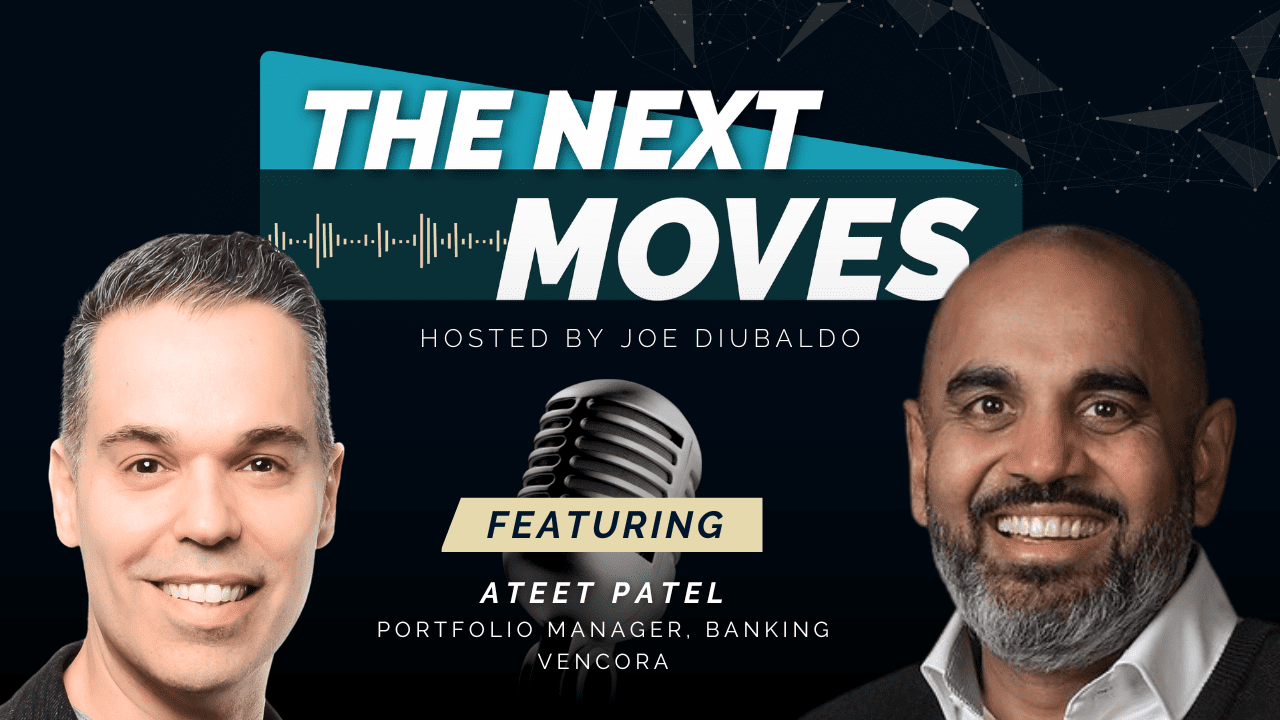
00:22 Joe: Welcome to the Next Moves. My name is Joe Diubaldo and for the past 25 years I’ve been helping people build careers and build amazing companies. The truth I’ve learned is that we all get stuck at different times and I want to help you get unstuck, plan your next move, and the move after that. I think the best way to do that is to look at the choices that some of our guests had in front of them and the moves that they made. So today I’m excited to welcome my friend Ateet Patel to the show. Ateet is not just your typical finance person, not just your typical CFO. He’s moved out of that role to become a dynamic portfolio manager and he oversees a number of portfolio companies which focus on fintech, financial services, really banking and payments. What makes this career path fascinating for me is the transition from the traditional space of accounting and finance into operational leadership and then ultimately running a portfolio — and I haven’t seen this often. So I see him as a strategic thinker, I see him as an operator, and I actually see him as a potential CEO in the future. He combines a deep understanding of finance and he has a hands-on approach to the business and the businesses that he’s working with. Beyond his professional achievements, I’ve talked to Ateet at length about how he looks at culture and how he looks at teams and how he thinks about those as critical ingredients to creating an awesome organization. I respect his thinking. So let’s dive deep into his journey and try to extract the insights that have shaped his career. Let’s look at the choices that he made. Welcome Ateet.
02:06 Joe: Like every other podcast out there that has a guest on, I think it’s important that people know where you came from and the journey that got you here. Understanding how you’re built, where you grew up, where you went to school — let’s get an overview of that.
02:22 Ateet: Yeah. Toronto born and bred. Grew up in various parts of Toronto, kind of moved out into York Region heading into elementary school and high school. One of the clear memories I have was a grade 12 business trip going to one of the accounting firms and kind of walking through the halls somewhere downtown — I can’t recall which one, probably doesn’t exist anymore — and kind of looking at the hustle and bustle and figuring out hey, this looks really cool. This looks like an interesting career path. I was doing well in business, not so much in sciences, and said hey, that’s probably a good opportunity for me to continue to focus down this path. So I applied to a number of universities as we did to get into school and ended up at U of T Scarborough at the time, doing the BCom program with a focus on accounting. Loved the school, loved the atmosphere, made tons of friends that I’ve kept today. A lot of the friends from there have become confidants in terms of my career and the approach that I’ve taken, and it’s always nice to have people to sound ideas off of around what’s next and what options are. Getting into my third year was critical to try to find my path — either do I become a chartered accountant and can I get into one of the firms? Because you needed to. And to be honest, it was a struggle for me. I didn’t have the grades I wanted and couldn’t get into any of the firms at the time and it was pretty competitive. So you had to pivot and figure out what’s a different option that I have. So I took a bunch of different courses in my last year and a half — more entrepreneurial, more business marketing — figuring let me build out my skill set. And then also made sure I had all the prerequisites for what was at the time the certified general accountant exam. It was a bit of a blessing in disguise — in my career, as I’ve gone through audit sitting on the other side of the table, it’s probably not the career path that I wanted to do at the end of the day. I actually like being on the other side and actually working with businesses. So soon after graduating I focused and worked on getting my CGA and became a certified general accountant, which was good for what I needed in terms of what I was doing in my career. It was fantastic and I’ve really just kind of gone from there.
04:47 Joe: You’re talking about hitting a point where you weren’t able to progress in the direction you want. I know that the firms are doing recruiting, they’re trying to pull people into the programs, and you’re wanting to be part of that. And then you make a move and you decide to take a bunch of different courses. What was that move about? Did you actually pick things in a regimented way or were you just like “I’ve got to get some other stuff on my resume”?
05:17 Ateet: I continued — so yeah, the clear decision point wasn’t necessarily my own. I had to then pivot and figure out okay, well what do I need? First of all it was going to the certified general accountant guide and saying “hey, what do I need here?” But then at the end of the day I always had this inkling — I wanted to be a business person, not just an accountant. I think the accounting skills and the finance skills are great but they’ll help you become a better business person. So my focus was what else do I need to know to be part of a business, operate a business, hopefully run or own a business at some point? So I was very specific. I would have never thought of taking — other than your general required marketing course in your commerce degree — a secondary marketing course or an entrepreneurship course. Things to try to expand my horizon and expand my thinking. I would love to say it was more thoughtful at the time but I was still 22 years old. It seemed like a good idea. But when I look back at it, it was actually pretty helpful. You learn — 10% of what you learn are concepts that you’ll carry forward and start utilizing at some point in your career.
06:31 Joe: You’re talking about taking on entrepreneurial finance courses and then you end up coming out of the program at Bell — massive institution. And in fact you’ve been part of Bell, you’ve been part of Accenture, you’ve moved into Brookfield — these are names that are giant. They’re monolithic at times. So why that decision given where you are now, which is fairly entrepreneurial? Why the decision to go big?
06:53 Ateet: I think it was opportunity at the time. The Bell opportunity was interesting — it was a rotational finance program, similar to what maybe GE used to do back in the day, where you go in and do a year in a specific role and move on to the next. I looked at that as an opportunity — you’re not just stuck, maybe not the right word, but focused in on one area. It continued to develop and grow. So it was a great program because we got to go into different areas of the business, different business lines, and be able to learn different things. So it started helping me define what I call my tool belt, and saying “hey, I can learn this today, next year I’ll learn something else, I’ll learn something else after that.” There’s a risk of not mastering anything, but it gives you a bit more breadth of all the different areas of the business. That’s how I started to look at my career — a tool belt approach. What skills do I need to continue to progress in my career? So I was your simple G&A analyst at Bell, did more revenue recognition as my second turn — a little bit more into the core accounting side. And then an opportunity presented itself to become part of project finance, which was something I didn’t know much about. Learning how to manage projects, project accounting, all of that fun stuff. And then I was able to leverage that into moving to Accenture, where they do tons of massive projects. I was able to work with senior executives, learning more about how you contract, what the pricing mechanics are, how you deal with your clients on the other side — a lot more activity through that angle. So I kept looking at my tool belt and said what else do I need? What else would make me well-rounded? And you do that through research, you do that through talking to people — what experiences are they getting that you may not be? From Accenture it was like — I think I still need a lot more accounting work. Running AR teams, running AP teams. So I moved to one of the Brookfield companies. They had a 60-70 person shared service organization that had payables and receivables and systems and just your general accounting, dealing with audits. Eventually started getting my first taste at mergers and acquisitions and how to account for it and be part of that transaction piece. It was great — just continued learning. I then moved back within Brookfield into a more senior FP&A role because I liked being able to impact the business from a day-to-day perspective. After that I found one of the Constellation companies — Volaris — and it was more of a business partnering consolidation role. If you think about the CFO hat, you’ve got the transactional stuff, the day-to-day, some level of managing audits and reporting, but consolidation I had never done. So I said, this looks like a good opportunity to grab consolidation work — bringing a number of businesses’ financial information together, eliminations, intercompany, all that technical stuff. But it was all progressing towards me becoming more of a partner to the business, because I had in essence — I say it loosely — mastered a number of areas within the finance domain, and as I was able to tackle each one I was just becoming more and more business focused.
10:11 Joe: Each of these jobs gives you something and they also inform you whether you want to be doing that at all.
10:18 Ateet: Absolutely. Absolutely.
10:18 Joe: You move quickly from certain roles is what you’re saying.
10:24 Ateet: Yeah, absolutely.
10:24 Joe: So I want you to, when you look at a company like Bell — what did it give you and what did you decide about yourself at that point?
10:37 Ateet: I would say it gave me just an introductory understanding of finance and how these businesses operate. It showed me a different business model — a unionized versus non-unionized business model. My first job was in G&A so monthly analysis, week-to-week G&A trending reports, understanding which way the business was headed. It showed me a little bit about being a professional. For those people who don’t know what G&A is —
11:07 Joe: General and administrative?
11:07 Ateet: Yeah, expense lines. So it wasn’t looking at revenue, it was really very specific on back office support costs and what it takes to run a business. But I think the key thing I probably took from Bell was just how to start becoming a professional. You come out of school, you don’t know how to be a professional.
11:22 Joe: I feel like I didn’t even know what business was.
11:28 Ateet: Yeah, you don’t know how to be. You went to class, you probably wore sweats or whatever and you trucked back home or back to your dorm and did your work, wrote exams, and you moved on. Actually working in a place and trying to be a professional — I would say I wasn’t the best professional but I was learning.
11:48 Joe: Tell us more.
11:52 Ateet: Lots of Friday mornings that were tough. But it was all about learning, going down the path of trying to understand what’s required. And there were a couple of moments in a couple of the roles where there were butt kicks that happened — it was kind of like “hey, if you continue down this path it’s not going to work out very well for you.” And those types of conversations were also very appreciated. You need to be able to level set and be open to feedback and say — okay, how do I improve, how do I get better?
12:18 Joe: Were there pats on the back along with the kicks?
12:23 Ateet: Of course, yeah, yeah. But you know — maybe it’s my personality or my makeup — I don’t always count the pats on the back. They’re not as memorable. It’s really the kicks in the butt that are more memorable because they’re a bit more defining in terms of direction.
12:37 Joe: So that happens at Bell. You end up at Accenture — what does it give you and what do you realize about yourself?
12:43 Ateet: I think the biggest shift going from Bell to Accenture was primarily starting my first experience in management and managing people. Accenture at that time was an awesome team to work with. We were a bunch of young up-and-comers looking to do lots with their career. Everyone was motivated, everyone was excited about taking on new challenges, and everyone was willing to work really really hard to meet their goals. So it was an awesome environment and an easy group to start managing — people who are equally as motivated makes life a lot easier. You have challenges and performance challenges and things you need to deal with, but I love that aspect of it. And what it really helped me understand is I am a team builder. I like working with people. I like trying to build a culture that’s focused on the needs of the individuals and the needs of the business. It was my first taste. I hadn’t formed all my opinions on leadership and management at the time, but it was the building blocks of going down that direction.
13:59 Joe: When you say words like “the needs of the business” — we’re really talking about the needs of the people that are driving the business towards the goal. The business is operating, there’s a strategy in place, we’re trying to execute, we’re trying to win, and we have this finance team that’s meant to help us be more effective and drive better decisions. But it’s the individuals that have to make those decisions. So are you building skills that let you understand how to support these people with what they need? Or is that later in your career?
14:33 Ateet: No, I think one of the key areas that we focused on as a finance individual — I think the best thing to do is you can easily explain a variance by saying “this is what it is” but asking what we used to call the why questions. And until you cannot ask a why question anymore — it’s the five whys — just keep asking, keep asking, keep asking until you get to the actual answer. That’s where the insight comes in. That’s where the business partnering comes in. And so I think we were all learning it, I was learning it, the team was learning it. I think it’s a skill set I’m hoping that the squad I was working with at the time kind of picked up and continued to use in their careers. I definitely have.
15:16 Joe: You and I had a talk before this about management and we use the word — there are things that the old guard has to learn. We’re the old guard, right?
15:24 Ateet: Yeah.
15:24 Joe: But we’re really looking at different management styles that have evolved over time. You talked about getting kicked — I’ve been there. I’ve had that discussion and I can’t say that I had a path forward from the kick. I had to find it myself. I’m curious — what did you see as you were coming up that you’re trying to emulate when you’re working with people, and what did you see that you’re trying to avoid and improve?
15:49 Ateet: Look, I think some of the stuff that needs to stick around — and I struggle a little bit seeing it today — is accountability. People are more willing to create excuses versus owning what’s happened or their impact to something, and really taking that, figuring out how to fix it, and moving forward. My sense is that people are open to feedback but if they don’t like it they may struggle with trying to incorporate that and figure out the next steps. My general sense — and it’s just my sense — is that historically I was held pretty accountable throughout my career. I had to be on top of stuff. If it wasn’t going well I would be told, and those were kind of the kick-in-the-butt moments. If I was doing well, yeah, it was making sure that as things were going well, people are appraising and providing positive feedback and input. I think the praise aspect of management is probably not as prevalent today as it may have used to be. It could be organization-based, but I don’t think as a business environment or even as a society we celebrate success enough. We focus on the negatives, on things that don’t go right. I think that’s an area that I try to continue and instill with my teams where I can.
17:12 Joe: How — celebrating a success is really, it’s as simple as…
17:18 Ateet: It’s hard. It’s as simple as the word — celebrating the success. It could be an email, it could be a team lunch. Sometimes it’s very simple things that can give people pride in the work and the effort that they’ve done. You want people to feel proud of the effort that they’ve put in. There’s two components — there’s feeling pride in the effort and the time that you put in, because everyone puts in time and effort, and then there’s celebrating the success — the positive outcomes that come from that. The worst is you put in a ton of effort and you get a bit of praise, but things don’t go as planned and you get beat down for it. So it negates that praise. It should be success and then additional success on top, not success and then a beat down. It’s kind of finding ways to drive positive momentum over time. I think historically there was a lot more around the punishment side — you made a mistake, you must be punished.
18:14 Joe: There’s a carrot and a stick but use the carrot the same way as the stick — constant.
18:19 Ateet: And I don’t think that actually leads to beneficial outcomes. I think coaching, constant conversation, and really digging into the root cause — so a postmortem on challenges is key. But I think we need to be open as managers in saying either the person’s not a fit for the role or there’s just a mismatch here, and the right assessment is to say we need to move on.
18:47 Joe: Correct me if I’m wrong on this — we have people on our teams that we work with, and I get to see this across all organizations because I think I have the most voyeuristic job in the world. I’m sitting in a room listening to CEOs and COOs talk about where things are going sideways and it’s instant pattern recognition. The idea that you’re going to improve the outcome for someone when you understand that there’s a skill deficiency that can’t be closed — a gap that can’t be closed — it’s interesting, because there’s a story they tell themselves which is “well, a body is better than nobody” and “having this person is better than having no one.” And the challenge for those individuals is that their team is struggling with those people too, and not making a decision impedes progress.
19:43 Ateet: I totally agree with you. And it’s been written in business books now too — they just call them, you know, I’ve heard the term “toxic A’s” — great performers but they don’t have the right personality — or lone wolves. Or people that have a great personality, great, but they’re just not delivering. It has a negative impact on the entire team and brings them down. I think the piece that is important is to spend the time and coach. I think people get frustrated and they actually don’t want to put in the time. I think management is about putting in time with your people to try to get the best out of them. And it’s not a — your 20-minute check-in once a week is not going to move the needle. It’s a dedicated, specific amount of time to go through the challenge areas. You give them the opportunity to improve, and after that process, if they are not improving, is when you have those conversations. I think one of the good things at Accenture was they had the career coach. They have a typical consultancy framework where you have a career coach and then you have your manager — two separate people. That gives you an opportunity to get feedback loops from two different people, directly from your manager and directly from your career coach. The career coach’s job was really important — it was kind of like “look, I’m hearing from your manager that you’re struggling in these areas. How can I help you? And if I can’t, or if I just see that there’s no improvement — hey, what are you thinking about next steps?”
21:06 Joe: One of our values is “above all else, be human” — right? The giant filter for what you’re about to do. And great values are operational — they guide your behaviors very clearly and how you operate. One other thing you talked about — celebrating success. I’d be remiss to not just say it’s career success. It’s personal success. These people — let’s be real, we work a majority of our lives and a lot of our time is spent working, sleeping, and then unfortunately everyone else gets whatever’s left. But people have milestones in their lives. And so I’m very open and enjoy and actually have lots of discussions with teams that I work with — what’s going on in your life, what are we celebrating, are you going to propose to your boyfriend or your girlfriend, have you finished your CFA class or whatever. And I think it’s important to — you know, talk about being human. That’s how you build relationships. You don’t build a relationship by just saying “here’s the task that I need emailed to me at the end of the week” — I think email is old now okay, it’s texted to me. But you know, that’s where you really build teams and relationships. But they need to be balanced. You can’t just have a team where it’s all fun and games. You need to be able to have feedback loops in there as well. But that’s how you celebrate — celebrating personal and professional success. I think that’s key.
22:37 Joe: I don’t want to beat this to death but I want to talk about the challenge with celebration. You’re running a portfolio of companies and we’ll get to that. But we’re kind of living in the future, right? And it’s your job to live in the future and to pull yourself back to the here and now and remember what is around you. It isn’t that you’re not feeling happy for the successes — it’s that you’re like “that’s fantastic and now we’ve got that one to tackle.” But the collective pause — because you’re living a year in the future. Managers are living, let’s just say leaders are living six months to three months in the future, managers are a month in the future, and the people doing the work are week and daily.
23:20 Ateet: That’s a great way to put it. That’s kind of the time scale that happens. And we forget because we’re on to the next thing because we understand where we’re executing.
23:27 Joe: I think the challenge — that will help if we consider it and think about it and acknowledge it — is this time scale. And it’s slowing down and getting back into the business for a bit to see what people are experiencing. So if you’re not next to them doing the work, and I believe this works so well and I’ve had to do it and I’ve had great outcomes — you step into the business at the level of everyone on the same time scale so you can appreciate it. And then those successes that are happening, they’re unfolding around you as part of your day and you’re like “ah, this is what it’s all about.” And the connection is better. You also have an appreciation for what they have to go through every single day.
24:17 Ateet: And our teams have to deal with real challenges. So it’s an interesting challenge. As you move up in an organization and become a leader, the hardest thing for any leader as they continue to move up is knowing what job they should be doing. And it’s easy to kind of slide back a little bit and say “I’ll just continue doing this because I used to do it in my last role.” But it’s really focusing on where your time is. It is important to keep in touch with kind of the full scope of the roles that are there — kind of what you’re saying. If you’re so far removed from certain roles or certain activities you don’t garner that appreciation. So it’s a tough balance for sure. And then how are you able to celebrate success if you’re so disconnected from those people? I’m trying not to make it seem like I’m 100% great at celebrating success. I think it’s missing and it’s something I strive towards improving as well. It’s not happening all the time as much as I need it to because we do get busy and it’s on to the next thing, we have a different challenge. So staying connected with the people is great. My personal approach is there are levels because they’re required to have appropriate decision making and risk management and all of that stuff, but everyone is equal from a human perspective.
25:36 Joe: So I remember you — when I first met you, I was going to try to pull you out of a job when you had just joined Volaris. And I called you and I said I want to talk to you — you probably didn’t know what I wanted to talk to you about — and I grabbed a coffee with you. And you have had an awesome career with them and you’ve made a ton of sacrifice and you’ve delivered and they’ve delivered for you. Let’s go through the quick evolution — you came in as what?
26:03 Ateet: I came in as VP of Finance. It was a smaller business at the time in 2014. Kind of the month-end, quarterly reporting packages that the CEO of Volaris needed about all the businesses, and digging in on some of the variances — why did we miss revenue, why did we miss EBIT, those types of things. But it was cool because it was different businesses and a very global business, which has been great. I’ve had the joy and benefit of working all across the world now and seeing how different cultures react to decisions and how they want to operate businesses. What works well for them in those regions and how they differ from a Canadian, North American aspect of running businesses — and how sometimes you have to put your stamp on how they do things versus them putting their stamp on how they’d like to run their business. So quickly VP Finance to portfolio CFO, from portfolio CFO looking at a group of these companies, to basically a portfolio manager — moving away from the finance piece, moving into kind of managing operations and doing more M&A work.
27:18 Joe: So talk about this job, what do you do now exactly?
27:25 Ateet: Our job really is to continue to buy, strengthen, and develop strong software businesses in the financial services space. The key piece that we try to ensure is long-term strategic thinking around these businesses, because we never sell them — they’re part of the organization forever. So we need to buy the right businesses, manage them correctly with a strong long-term strategic focus, give them the love and attention they need and the management support that’s required, and really watch them flourish and hope that they’re continuing to grow past all expectations that we initially set when we acquired the business. It’s an interesting role. I really separate it into two. The operations stuff is fascinating — it’s everything you would read about in business books in terms of understanding your market, understanding the buyer persona, understanding how to operate a day-to-day operation and create efficiencies. I actually really enjoy that side of the shop as well. And then you have the M&A side, which has its peaks where you’re absolutely slammed and working like crazy, and your valleys where things are a bit slow. But you’re constantly looking for businesses that make sense for your group. And once you get a bit of traction, it’s working with them, understanding their business fully, doing all the appropriate diligence, negotiation, and then closing the deals. There’s a lot of excitement, stress, and joy in the deal work. And it’s unique because you get a finite transaction — you start and you close and that’s kind of done for your work on that piece. Operations is the rest of it — it’s continuing, it’s day after day, month after month, year after year. So the M&A piece is kind of cool because it’s a bit transactional — you have a start and an end to it, which is kind of fun. And then the operation side is fun because you’re learning tons through that process. We have great CEOs that are running these businesses and they’re — I think you learn from everybody — so they’re bringing ideas that are awesome that you can then carry from their business to the next business and say “hey, this business is doing this, I think you should also think about that.” And they’ll pick it up if it makes sense for their model, and if it doesn’t they’ll come down a different approach. It creates a bit of a feedback loop where you can share ideas across the group.
29:56 Joe: Is this at the beginning part almost like a scouting model — where you’re scouting players and you have members of your team hunting and trying to find those players that match the goals, the target markets? And how does that process work from your side? You’re talking about finding companies, and those companies probably have to match the thesis.
30:20 Ateet: They have to match the thesis — not probably. You have a very clear idea of what you want to do with these companies. So if you have the wrong input coming in it’s going to just burn cycles. Absolutely.
30:28 Joe: So talk about the scouting — how are these things found?
30:33 Ateet: It’s a lot of elbow grease. We have a corporate development team that in essence is scouring the world for businesses that fit that criteria, which is not nothing complex. For us it’s primarily in the financial services and banking space — mission-critical solutions that are very sticky, hard to replicate or pull out. And for us we look at stuff that has a fair bit of recurring revenue, so there’s a level of consistency of cash flows. A lot of times they are businesses that require a little bit of attention, and sometimes they’re being operated very well. We have discussions to determine are they a fit, do they like our story — which a lot of people do because it’s about being — we have our terms — a safe harbor. Their business will be around forever under us. We rarely change branding. We believe brand has a certain level of value in the market especially in the markets they’re in. Coming in and changing the brand or trying to put it all under a singular brand — there’s no value in that. The value is the independence and the individuality of each of the businesses. We leave the businesses to run autonomously. We’re not synergizing the businesses, we’re not combining them with other businesses — we leave them alone. But we provide them all the support in the world that we can. And on the flip side they have to report back to us and meet our objectives and quarterly standards. With that set of criteria, the Corp Dev team is out there and they’re hunting. They’re having phone calls and it’s a tough job that I appreciate them doing. It’s not easy. Anyone who’s done a sales job or a cold calling job — it’s tough. I think celebrating their successes is very key because it’s a tough role. You’re calling someone to say “I want your company.”
32:32 Joe: And they’re like “go away.”
32:34 Ateet: Yep. And being told “go away” — I hate rejection, I don’t know if you do, but a lot of people do. So they’re strong-minded individuals that are able to go through that and I have a lot of respect for them for being able to drive through those things.
32:49 Joe: So let’s assume that I’m in one of these companies. You’re calling me or they are, and I’m the CEO, the owner. I want to know the cohorts or the categories — how often are people like me saying “I want to talk and I want to talk now” versus “I don’t want to talk at all” or “maybe in the future, let’s keep in touch”?
33:21 Ateet: The percentage of “I want to talk now” is like the actual bluebirds that fly in and just land right away. Sub 1%, I would say. It’s very rare. Look, there are lots of ways to sell your business and it all depends on your motivation. You have sellers that are faced with a life event — whatever that may be — and they’re going to make a different decision on what matters to them. It could be what happens to the family that’s in their business, what happens to their business as a whole, the brand name. And sometimes those factors trump money. As a finance person it’s mind-boggling to me but I understand it — we talk about being human, that’s the human side of it. “I don’t care about that extra $500K but I want to make sure that this happens with my business. Can you commit to something like that?” So I think the motivations of the businesses in terms of what they want out of it really lends to how successful we are in finding those businesses and what happens with them. The money-oriented ones where money is number one above all else — they go to brokers, can be very aggressive, they have a price in mind and they’ll stick to it, and if we’re not there they’re happy to move on. So we do a lot of work to assess where they are on that continuum. And that’s the key — I’ve found it’s my ability to build relationships, to get a better understanding of what people are looking for and seeing if I can meet those needs or not. And if I can’t, I’m happy to maintain the relationship rather than just trying to do a quick touch-and-feel and then walk away. I’d rather build relationships because there is a level of six degrees of separation that can be beneficial for both the other individual and myself.
35:20 Joe: This has come up multiple times — and what I’m talking about is this is a global role. And these companies seem to be almost anywhere. So out of what you have under your portfolio right now, where are they located?
35:36 Ateet: So the businesses under my portfolio right now — one’s in Toronto, so here in Stouffville actually. One is in Ireland, one is based out of Switzerland but they’re a global company. And then the other two — one’s based in Ecuador, one is based in Miami but services all of Latin America, and one is based in Costa Rica.
36:06 Joe: So you have these companies that are located somewhere serving a large market that’s locked in and loves the technology. How does that affect your life? How much are you traveling?
36:25 Ateet: I try to balance my travel, to be perfectly honest. I try not to travel more than once a month if possible. You just have to be strategic about when you can travel. I think one of the benefits of what we went through in 2020 and 2021 was our ability to be effective working behind our screen and connecting with people at distance. There’s a huge amount of value in being face to face, but you have to be strategic about when you need to travel and have very clear plans. So if I’m traveling it’s not a boondoggle — we’re actually traveling with a specific reason and there are outcomes we’re looking to get. From an M&A perspective it’s usually around diligence — we want to be there, look at them face to face, go through the data live and get through that process. When it comes to operations, if a business is performing we really believe in the autonomy piece, so we leave them alone. We’ll have our catch-ups but I don’t need to bother them — let the CEOs run their business, they’re doing a good job. If there are opportunities to improve and make some changes, or opportunities to spend some time to really refine the strategy, then you would do that in person.
37:46 Joe: So what do you take away looking at these global companies and then you contrast to what we have in Canada?
37:53 Ateet: I mean, I think the North American mindset is very much profit oriented. And people will put other factors above profit globally in other areas of the world. Our world is we need to find ways to be efficient and maximize profits as much as possible. But I think you can find a balance to do it in a humane way with the right approach — coach them and teach them that that’s actually an okay way to operate a business.
38:19 Joe: So the challenge would be they could look at us and say that’s not how we want to operate. So I’ll just drop a term like Constellation — which is the parent company from which all other things spawned. You know the term “software is cash flow” — is that an accurate representation? Which is: we have these organizations, we know they have a good customer base, we know those people are locked in and they like the product or there’s just nothing else out there, and we can look at this and tune it and create value for ourselves. Is that accurate?
38:54 Ateet: I think it’s accurate but I would flip it. The view we try to look at it is customer value versus our own value. I think if we can maximize customer value we can in turn maximize our own value. Software can create a ton of cash, but if you’re not focused on your customer it’s going to be meaningless — it will disappear on you relatively quickly. I think a lot of times what we see when we look at businesses from afar is they’ve either done a fantastic job nurturing and meeting the needs of their clients but they haven’t found the economic trigger for themselves to make sure they’re getting their fair share of the value. Or on the other side, they’ve extracted all the value but actually aren’t delivering any to the clients. So you’ve got to figure out where a business fits somewhere along that continuum and then be able to focus in those areas. Sometimes a business has to be a full press — we have to improve all customer relationships, we need to show them the value that we as owners can bring to the table, and eventually work towards making sure there’s an appropriate value share between the two organizations.
40:04 Joe: That’s awesome. So the spectrum — I actually want to define that. You’re running into companies that have done two things because they’ve been operating a while. These are not companies that don’t have customers. So they’ve managed to secure customers but haven’t really realized any economic return at a level that’s acceptable. Versus the other side which is “we are sitting here and we are extracting — this is extractive right now and customers aren’t feeling that there’s value.”
40:28 Ateet: Yeah. I mean, it’s — if you were to say 90% of a business is acting this way — I.E. they’re not extracting enough value — and then 90% of a business is extracting only value, there’s always going to be a customer here or there within that business that is being treated fairly. It’s the ones in the middle where maybe they treat one or two clients really well but they haven’t treated the rest of them.
41:02 Joe: It seems like these are two very different things. If you have companies at either end of the spectrum that you’re approaching, I’m thinking — to help either one of these is a different skill set potentially internally. Depending on how frequently I see one type versus the other, you get good at something at the cost of breadth. So what do you cultivate internally to make this happen? Is it really simple, is it playbook focused?
41:29 Ateet: It’s definitely playbook. There’s the diagnostic and then you execute a playbook. Is it that simple or is there something more that makes it gooey and hard to figure out?
41:34 Joe: Is it that simple or is there something more that makes it gooey and hard to figure out?
41:40 Ateet: After you’ve done a number of these and looked at a number of businesses, you can do the diagnostic and figure out here are probably the five best steps we could take to focus on that issue. A lot of it is simple stuff. Say you’re dealing with a client group that you haven’t paid a lot of attention to — the first thing you’re going to do is hit the road, have a road show, hear their concerns, understand what’s going on, how can we serve you better, what have you been missing? And the great thing is that because there’s been a change in ownership, it creates a catalyst for you to go and do that and really dig in and figure out what actually is going on here. What do we then need to strategize and change so that we can better support these clients? Through those conversations you’re going to find clients saying “yeah, I’m happy you bought them, but we’re not going to stick around” — and that’s a risk that we take and we don’t like to take. But that one does show up. So we try to sometimes even talk to them beforehand — right before we do a deal — because it’s important to understand how the customers have been treated. There’s no business without those customers.
42:46 Joe: I think the way you target as an organization the segment you serve is so much of winning. Because if you have no focus it’s very difficult. Are you walking in half the time and saying “there is no focus and this is the challenge and you need to let all of these customers go because they don’t match what’s going to help you win”? Is that a frequent symptom? Or by the point you’re stepping in, they know their customer — it’s just tuning how they’re serving them?
43:11 Ateet: I think they know their customer — it’s tuning how they’re serving would be the main thing. So you’re not firing a bunch of customers when you buy these companies?
43:17 Joe: No, not often. I think we need to look at each customer and the value and understand — are they challenged in terms of being serviced as a customer, are they challenged operating, are they challenged in many different factors? I’m not saying we preclude that option, but it’s not a regular occurrence.
43:42 Joe: So I want to move to something specific about how you look at talent and how you develop people. I’m going to give you some research that I did — some qualitative stuff, not about you but about Vencora. And it’s from someone who had existed at a competitor prior to this and had said “I love cutting costs and I love looking at what is valuable and what isn’t. And I was thinking about the training that we’re doing here now that I’ve joined and I’m trying to figure out its impact and is it necessary. And what I realize is just by being here and watching the culture evolve, I can’t point to anything else that’s improving it except this training, development, and focus on culture.” So someone was at a direct competitor and from how it felt to work there and how people engaged with the organization was drastically different. And the only thing that when he came over he could really look at and was trying to quantify — should we keep the training, is this valuable, why do we do all this — was that training and that investment in the team. So is that something that is conscious, that’s been brought in? Or is it something that’s evolved over time? Are you taught this, is this you sponsoring it?
44:59 Ateet: I think there are definitely a large number of leaders within the organization as a whole that believe training and development is key. It’s definitely a personal mantra of mine to ensure that we continue to maintain training development budgets and programs regardless of situation. It’s well known that back when I was coming up, when you had to do a cost-cutting exercise, you go after every G&A line — no more travel, no more this, no more that — and people would often cut training and development budget. And I think that’s the absolute worst thing you could possibly do for an organization. My viewpoint is training development budget never gets cut. It’s an area that you have to continue to invest in. It becomes variable by the number of employees you have — that’s fine — but it has to be a focus to be able to grow an organization.
46:07 Joe: What is it with you and your organization — is it in-person training, is it desk-side coaching, is it sending people off on whatever program they want to complete?
46:14 Ateet: We try to do a combination. We’ve created a lot more programs more recently that are around desktop training — courses that are online that you can take, that have been tailored and specifically focused to kind of our business environment to help people improve. We try to create more succession planning to figure out gaps of individuals and training gaps that we can then focus on, saying “here’s a plan that will help you get to where you want to go.” The other area is we do a lot of in-person summits, and then a larger meeting once every year or couple of years. The summits are functional. I know this year they did a broader finance team across Vencora and with another couple of groups — a finance, IT, and legal offsite in Vienna, Austria. It’s dedicated three days to focus on very specific agenda items. And it’s from the junior resources to the most senior resources — it’s a knowledge share. “I see this in my region or I see this in my region.” Learning about new rules, new accounting pronouncements, whatever it may be. Keeping everyone up to speed and keeping the training up so that they’re on top of what’s happening in the organization and continuing to build their skills. Those summits are not only back office like finance, IT, and legal — they do it for professional services, for research and development groups. They’ll do them all over for various different departments. Those have been successful. And the last piece is really our annual events, where it’s a combination of networking and best practice sharing.
48:06 Joe: I want to change directions for one second and make it specific to you. I like to ask the question of where have you gotten stuck before. Because we’re all trying to make the best possible decision, or sometimes things happen to us when we’re not expecting it. So where have you gotten stuck, what move did you make, and in hindsight, what do you wish you had done? What move do you wish you had made instead?
48:29 Ateet: It’s a great question. As we go through our career, as we’ve talked before, there’s no playbook. We’re not given a playbook on how to navigate through these situations. You’re kind of told the right way to behave by the people that are employing you, but is that actually the right thing for you in the long term? I think there’s a lot that’s just based off of trial and error. One example I can point to is — I thought I should have been promoted into a specific role and it didn’t happen. It was frustrating. I then quickly looked for another opportunity and moved on. And that was my way of getting unstuck — “you know what, screw this place, I’m out.” Which may not have been the most beneficial thing at the moment. There are lessons that kind of get learned through that. There’s a little bit of professionalism and maturity that comes out of it. I was probably not as mature as I would be today in handling that situation. I probably would have analyzed different paths I could have taken versus the very emotional reaction of “I’m hitting the job hunt immediately and getting out of this place.” But do I regret it? No. I think all of these situations you go through — there’s no playbook, so you’re building your own. You have to go through some of these things to figure out what you want and don’t want and how you’re going to react to situations in the future. I was probably around 30 at the time — I didn’t know anything.
50:10 Joe: And you’re how old now?
50:14 Ateet: 31. Yes, exactly. I figured it out.
50:14 Joe: So yeah, I really — I don’t think there’s much to regret in life because everything should be a learning opportunity and not something to be regretful. We can tether ourselves to the past and stay stuck as that person if we’re constantly regretting something that we had done. Now I’m talking about obviously something as straightforward as career moves, not something horrible. Agreed. That reaction to leave — what makes you think that might not have been the right one? Because your career looks like constant progression.
50:48 Ateet: I think what people don’t realize is to move is difficult. It’s exciting, it’s “world’s your oyster, lots of opportunity” — but it’s hard work. My view is people don’t value internal reputation, networks, and connections with individuals within your existing organization and how much value that actually brings and how it makes your job easier to do. And then having to go somewhere else and rebuild all of that, and then doing it again a few years later, doing it again a few years later. Some people love doing it and that’s part of their DNA and their makeup. Others don’t. And I think I fall in between. I like the excitement of meeting new people and kind of doing that, and I get a little bit of that in my job today because we talk to new companies and learn more about them. But having to build my reputation and the goodwill that I’ve created based on my relationships and my network — having to build that all over again is a difficult thing. So when I say it may not have been the best decision to move — I probably just didn’t have enough insight to say “was it the best decision at the time?” As I look back at it — no regrets — but at the time I should have been more thoughtful about what I thought my next steps were going to be. The only thing I really made sure I stuck true to was the tool belt concept — making sure that the next move was still building towards me being a more rounded finance professional at the time.
52:36 Joe: I also want to say that you can’t — sorry, you shouldn’t overestimate the organization and those internal relationships and the internal credibility. Because we’re credible people and we’ve demonstrated ideally the ability to transition between roles and between companies. But that equity that comes, that you’ve built over time, and the credit that you’ve accumulated over time — that’s yours. It doesn’t belong to an organization.
53:07 Ateet: 100%. I mean that for you specifically and also for people I’ve watched succeed. There is something magical though when you’re in an organization and they’re doing something a little different and a little special — and people are approaching you to leave. What you can’t ignore is does it feel great here because of how we’re doing what we do? Because most business is just straightforward. It’s how you choose to engage and solve the problem that makes it special. What kind of teams you build, how they all come together, how you collectively tackle the problems — that’s when it is something where you should give more credit to that if it’s a little magical. And unfortunately that shine and magic can wear out over time. Organizations are not static — they’re not always existing at a certain stage.
53:56 Ateet: Yeah, I would agree. I think it’s everything’s evolving over time. I would agree with you. I think the overvaluing of certain attributes can be risky for you as an individual. Placing too much emphasis on it can lead to complacency, which is a challenge as well. As much as I said it can be challenging to move because you’ve got to rebuild all those things — part of that is built with complacency as part of that decision-making process. It’s easy to stay where you are.
54:33 Joe: So what, as we turn to the future and we think about our lives — I’m very curious how do you think about your career and how it’s evolving. How do you forecast it into the future, what do you see coming and how you think about it going forward?
54:52 Ateet: The biggest one — some of the things that I do want to focus in on is building and leading my own teams, my own organizational culture, with a focus on diversity and inclusion. And really shifting as much as I can based on my experience — filling the gaps where they may have existed historically.
55:17 Joe: What do you think about that whole thing where they say we get promoted to the level of our competence until we become incompetent? Because the role that we’re in is beyond us. Have you had those moments where you’re like “I am” — is it like “I’m a fraud”? Because I’ve had that before. “I don’t belong here and how do I get my hands around it.” What do you think about that idea?
55:45 Ateet: It’s a very common concept. I would say most leaders have dealt with that situation — moving to your level of incompetence or moving out of your comfort zone where you feel maybe a bit like a fraud. I would suggest that people are afraid to ask for help. People are afraid to ask questions of others. And you have a network for a reason. I think that’s where ego — in my opinion — probably gets in the way and is a negative. Ego is valuable in tons of scenarios — there’s a certain level of ego that is beneficial to have to be successful, not an over-the-top ego, but a certain level. But I think it’s the missed opportunity to ask people who know how to do something the question of “how do you do this?” Because I think most of us are capable of learning and figuring stuff out. But if you’re not given a path or not willing to ask the questions, you’re just going to make it harder for yourself to figure it out. I think we’ve all been there — like you said, I’ve been there. Like “oh crap, I don’t know how to do this job.” I really don’t have much shame in asking others “hey, how do you do this?” or “what did you look at?” or “any tips on how I could get this done better?” or “are you open to looking at this with me just to make sure I’m not missing anything?” And I utilize my team in a similar manner. I pull a presentation together and I send it to a number of people. Just because you’re doing it doesn’t mean it’s perfect and it’s always great to get another set of eyes on something. It doesn’t matter who it is — to the extent you want someone who’s competent, of course — but it doesn’t need to be “only my peer or only someone above me can review it.” Anybody can help you through those things. And I think just being open to asking people for help will benefit you as an individual.
57:53 Joe: This was awesome. This was fun.
57:53 Ateet: Awesome. I really enjoyed it.